

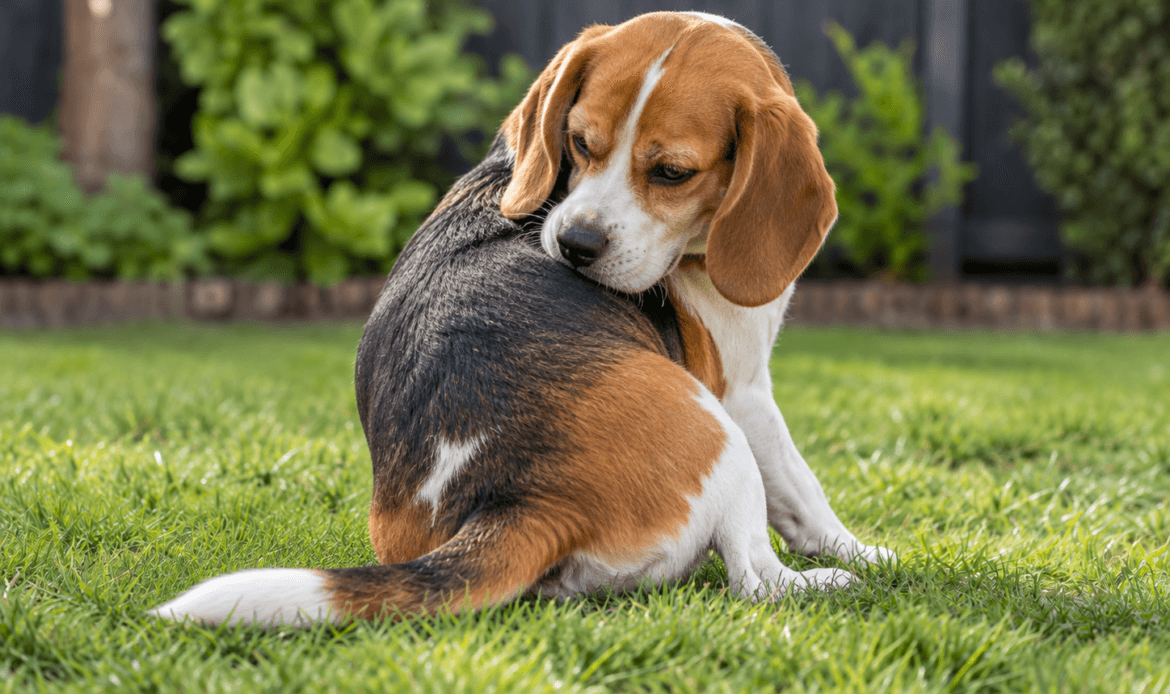
Why Is My Dog Scooting? Common Causes and When to See a Vet
If your dog suddenly sits down and drags their bottom across the floor, it can look a little ridiculous.
But if it keeps happening, there is usually a reason.
Scooting is generally your dog’s way of trying to relieve itching, irritation or discomfort around their bottom. Sometimes the cause is quite simple. Other times, repeated scooting can point to an issue that needs a closer look.
At Blakehurst Vet, it is something we see fairly regularly.
Quick Answer
Why is my dog scooting?
Common causes include:
- Full or irritated anal glands
- Allergies or itchy skin
- Irritation around the bottom
- Parasites
- Loose stools or diarrhoea
- Less commonly, another problem around the anal area
If your dog scoots once and then carries on as normal, it may simply have been a temporary irritation.
If it keeps happening, they are licking the area repeatedly or they seem uncomfortable, it is worth booking a vet check.
What Does Dog Scooting Mean?
Scooting is when a dog sits with their bottom against the ground and pulls themselves forward using their front legs.
They are usually doing it because something feels itchy or uncomfortable.
You may also notice your dog:
- Licking or biting around their bottom
- Suddenly turning to look at their back end
- Sitting awkwardly
- Having a strong fishy smell
- Seeming uncomfortable when passing a bowel movement
One scoot does not necessarily mean there is a problem.
Repeated scooting is different.
Anal Glands Are a Common Cause
Anal glands are one of the most common reasons dogs scoot.
If they become too full or irritated, dogs may drag their bottom along the ground, lick around the area or seem uncomfortable when sitting.
You may also notice a strong fishy smell.
In many cases, it is fairly straightforward to deal with. But if the problem keeps returning, there may be something else contributing, such as allergies or skin irritation.
Can Allergies Make a Dog Scoot?
Yes.
Dogs with allergies can become itchy around their bottom as well as their paws, ears and skin.
If your dog also:
- Licks their paws
- Scratches frequently
- Has recurring ear problems
- Develops red or irritated skin
- Has repeated scooting episodes
there may be an underlying skin or allergy issue worth investigating.
Our guide to why dogs lick their paws explains some of the other signs we commonly see with itchy skin.
At Blakehurst Vet, our allergy and dermatology consultations focus on identifying what is driving recurring itch rather than simply treating each flare-up.
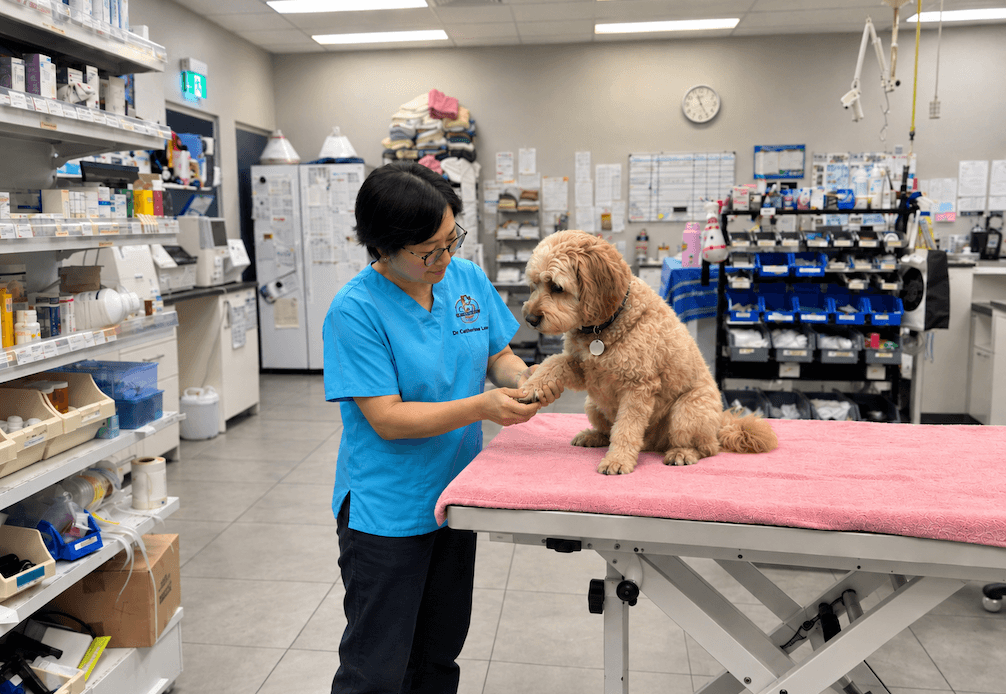
Does Scooting Mean My Dog Has Worms?
Not necessarily.
It is probably one of the first things many owners think of, but worms are only one possible cause of scooting.
Some parasites can cause irritation around the bottom, but anal glands and skin irritation are also very common reasons.
If your dog is scooting repeatedly, it is better to have them checked rather than simply giving an extra worming treatment and hoping that solves it.
Regular flea, tick and worm prevention is still an important part of keeping dogs healthy.
Could It Just Be Irritation?
Yes.
Loose stools, diarrhoea, irritated skin or something caught in the hair around the bottom can all make the area uncomfortable.
Long-haired dogs in particular can sometimes become irritated if faecal material gets caught in their coat.
If the scooting happens once and stops, there may be nothing more to it.
If it keeps happening, it is worth checking why.
What If My Dog Keeps Scooting?
Recurring scooting is worth investigating rather than repeatedly treating the symptom.
Some dogs do develop recurring anal gland issues, while others may have allergies, ongoing skin irritation or another underlying reason for the discomfort.
If your dog keeps doing it, we can look at the whole picture rather than just the scooting itself.
Can Scooting Ever Be a Sign of Something More Serious?
Occasionally.
Most dogs that scoot have a much more straightforward cause, but persistent changes around the bottom should still be checked.
Book an appointment if you notice:
- A lump or swelling
- Blood or discharge
- Significant redness
- Your dog seems painful
- Difficulty passing a bowel movement
- Repeated scooting that is not settling
These signs do not automatically mean something serious is wrong, but they do warrant a closer look.
Should I Try to Empty My Dog’s Anal Glands Myself?
We generally recommend having the cause of repeated scooting assessed first.
Not every dog that scoots has full anal glands, and repeatedly trying to empty them when that is not the problem will not help.
If your dog does have recurring anal gland issues, your vet can advise you on the best way to manage them.
When Should I See a Vet About Dog Scooting?
Book an appointment if your dog:
- Scoots repeatedly or over several days
- Frequently licks or bites around their bottom
- Has a strong fishy smell
- Seems uncomfortable sitting
- Has redness or swelling
- Has blood or discharge
- Has difficulty passing a bowel movement
- Keeps having the same problem
If the scooting happens once and then stops, you can usually keep an eye on them.
If it becomes a pattern, it is time to find out what is causing it.
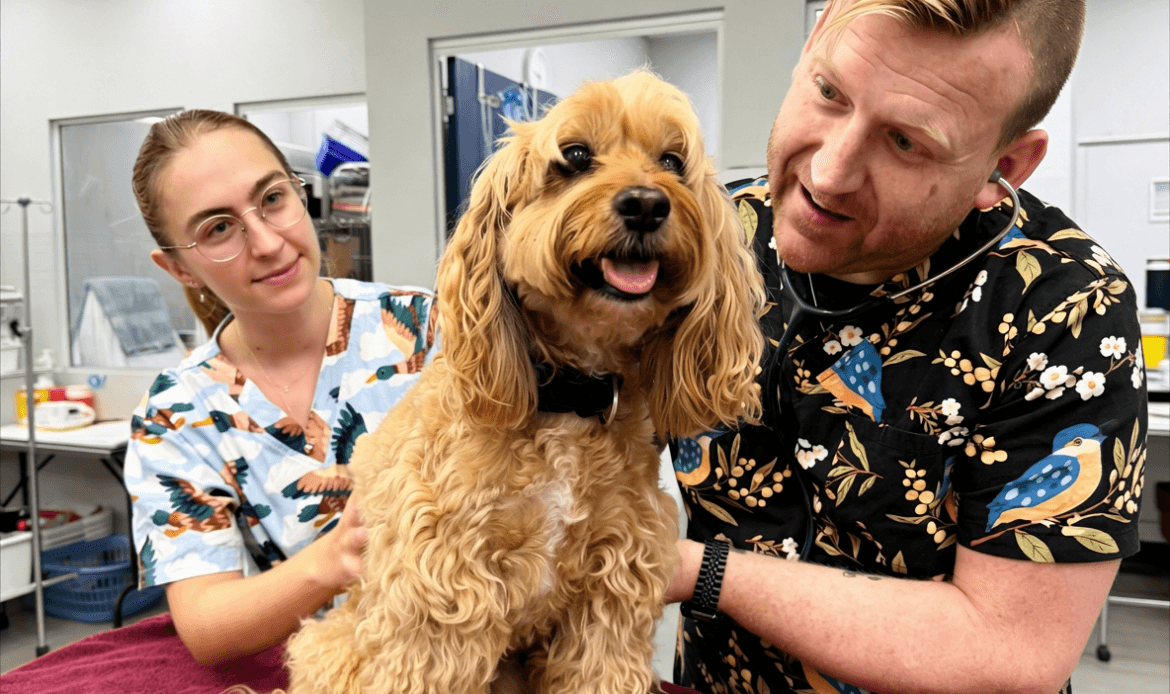
How We Can Help
At Blakehurst Vet, we can check the area and work out what is causing the irritation.
Sometimes it is something simple. Other times, recurring scooting can be linked to allergies, skin problems, parasites or another underlying issue.
If your dog has been doing the bottom shuffle a little more often than usual, there is no need to guess what is causing it.
We care for dogs from Blakehurst, Hurstville, South Hurstville, Sylvania and across the Sutherland Shire.
Book an appointment with Blakehurst Vet and we can get to the bottom of it.
Frequently Asked Questions
Why does my dog keep scooting?
Repeated scooting usually means something around your dog’s bottom is itchy or uncomfortable. Anal glands, allergies, skin irritation and parasites are some of the possible causes.
Does dog scooting always mean anal glands?
No. Anal gland problems are common, but they are not the only reason dogs scoot.
Does scooting mean my dog has worms?
Not necessarily. Parasites are one possible cause, but skin irritation and anal gland problems are also common.
Why is my dog scooting and licking their bottom?
Both behaviours suggest irritation or discomfort around the area. If it keeps happening, it is worth having your dog examined.
Is dog scooting an emergency?
Usually not. However, contact us promptly if your dog is very painful, has significant swelling, blood or discharge, or is having trouble passing a bowel movement.
Can allergies cause scooting?
Yes. Allergies can make the skin around the bottom itchy just as they can affect the paws, ears and other areas of the body.