

How Much Should I Be Feeding My Pet? A Guide for Dog and Cat Owners
Your dog has finished dinner but is still staring at you as though they haven’t eaten in days. Meanwhile, your cat is loudly insisting that their food bowl is empty, despite the very obvious biscuits still sitting in it.
Sound familiar?
Knowing how much to feed your pet isn’t always straightforward.
There are feeding instructions on the packet, advice from friends, recommendations online and, of course, your pet’s own very convincing opinion.
But how do you know whether you’re giving them enough, too much or just the right amount?
At Blakehurst Vet, feeding and weight are common topics during routine appointments. The good news is that a few simple habits can make managing your pet’s portions much easier.
Quick Answer: How Much Should I Feed My Dog or Cat?
The right amount depends on your pet’s age, size, weight, activity level, health and the type of food they’re eating.
As a starting point:
- Choose a complete and balanced food appropriate for their life stage.
- Use the feeding guide on the packaging as an initial estimate.
- Measure their daily food rather than guessing.
- Include treats and snacks in their daily allowance.
- Monitor their weight and body condition over time.
There isn’t one portion size that suits every dog or cat, even if they weigh exactly the same.
If you’re unsure, our vets at Blakehurst Vet can help determine an appropriate daily feeding amount based on your pet’s individual needs.
Can I Just Follow the Feeding Guide on the Packet?
The feeding guide is a useful place to start, but it isn’t necessarily the perfect amount for your pet.
Most pet food manufacturers provide suggested portions based on body weight. These are general recommendations rather than personalised feeding plans.
For example, two dogs weighing 10 kilograms may need different amounts of food if one spends the day running around and the other prefers relaxing on the couch.
The same applies to cats. An energetic young cat may have different energy needs from an older indoor cat with a much quieter routine.
Even desexing can change a pet’s energy requirements.
The best approach is to use the packaging instructions as a starting point, then adjust appropriately based on your pet’s weight, body condition and veterinary advice.
What Affects How Much My Pet Needs to Eat?
Several factors influence your pet’s daily food requirements.
These include:
- Age: Puppies and kittens need food that supports growth, while adults need appropriate maintenance nutrition.
- Body size: Larger pets generally require more energy overall, although their needs don’t increase in direct proportion to weight.
- Activity: Active dogs may require more energy than dogs with quieter lifestyles.
- Desexing: Energy requirements can decrease after desexing.
- Health: Certain medical conditions can affect dietary requirements.
- Food type: Different foods contain different amounts of energy, even when portions look similar.
This is why feeding the same number of scoops every day without reviewing your pet’s weight may not always give the best result.
Our Wellness & Prevention appointments are a great opportunity to review your pet’s diet, weight and nutritional needs.
How Can I Tell If I’m Feeding Too Much?
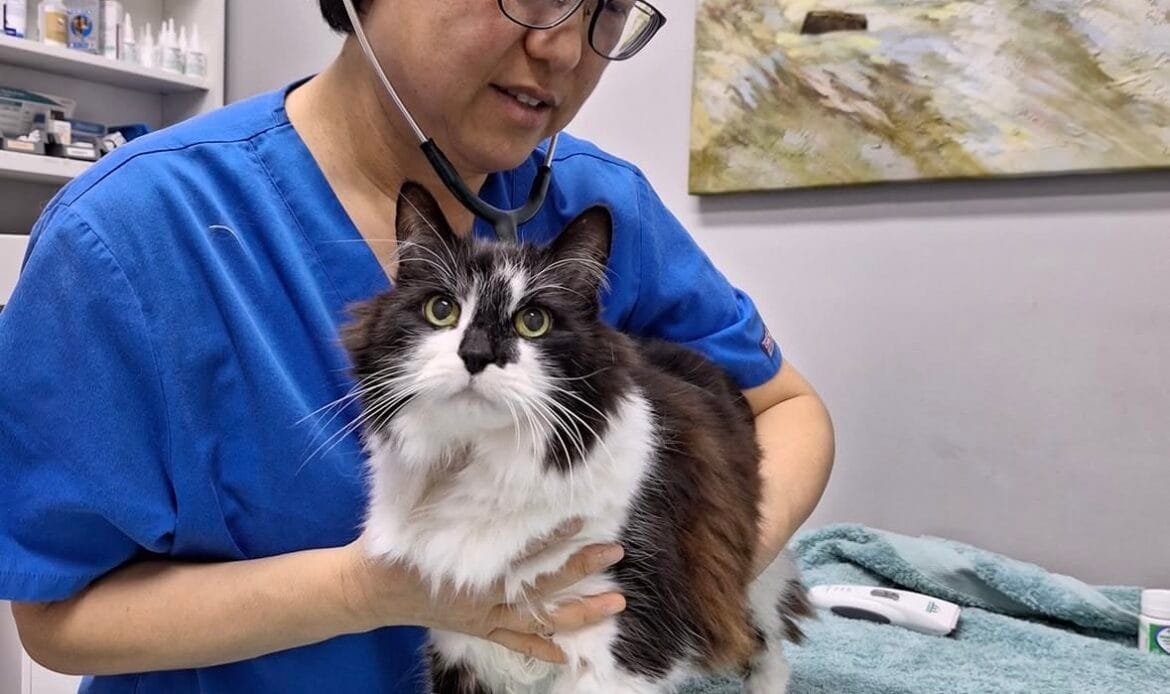
One of the best indicators is your pet’s body condition.
A healthy body condition is about more than the number on the scales.
For many dogs and cats at a healthy weight, you should be able to feel their ribs beneath a light covering of tissue without pressing too firmly.
When viewed from above, there is usually a visible waist, although this can be harder to see in particularly fluffy pets.
If your pet is steadily gaining weight, losing their waist or becoming more rounded, their food intake may need reviewing.
However, appearances can be misleading. Breed, coat type, muscle and age all affect how a pet looks.
At Blakehurst Vet, our vets can assess your pet’s body condition and help identify an appropriate weight range for them.
Should I Measure My Pet’s Food?
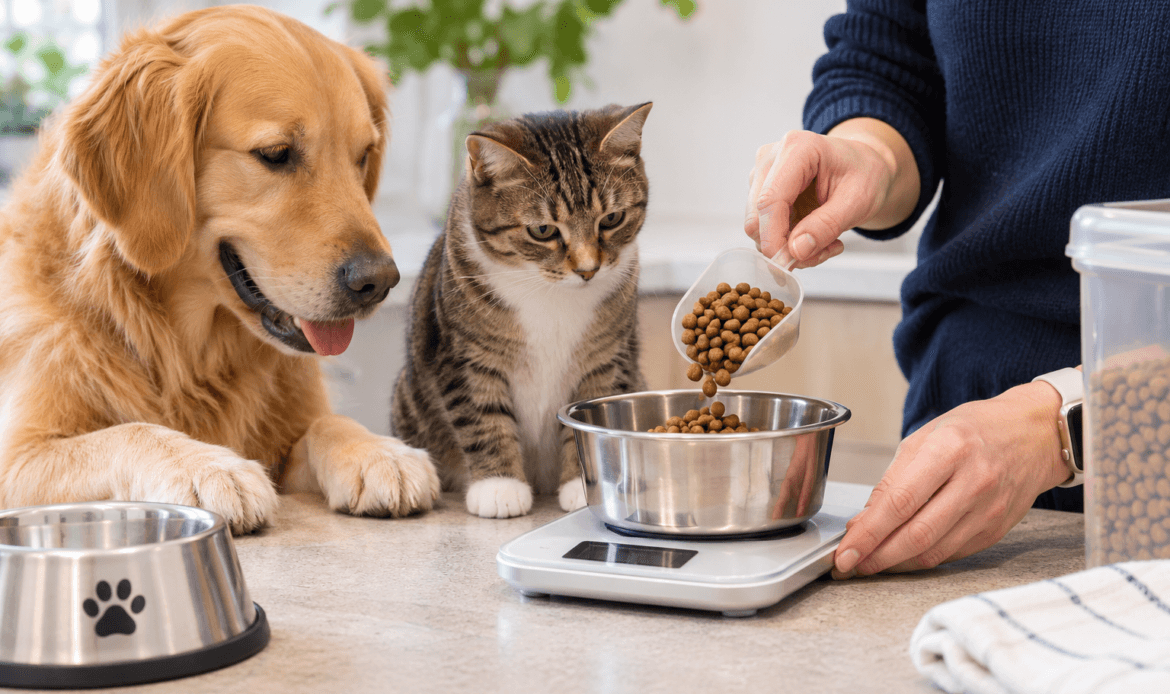
Yes! This is one of the easiest changes you can make.
Pouring biscuits directly into the bowl or using a generous scoop can lead to portions that vary from day to day.
A small kitchen scale can make feeding much more consistent.
Start by working out your pet’s total daily amount, then divide that between their usual meals.
For example, if their recommended allowance is 120 grams of a particular dry food each day, you could divide that into two 60-gram meals.
That is just an example of dividing an allowance, not a recommended portion for every pet.
If you feed a combination of wet and dry food, remember that both contribute to your pet’s daily energy intake.
The amount of food in grams also depends on the product. A small serving of one food can contain more calories than a larger serving of another.
What About Treats and Snacks?
Treats are part of the fun of having a pet.
They’re useful for training, rewarding good behaviour and sometimes just telling your dog or cat how wonderful they are.
But they still count as food.
As a general guideline, treats should make up no more than about 10% of your pet’s daily calorie intake.
The remaining calories should come from an appropriate complete and balanced diet.
This includes training treats, dental chews and the occasional extra snack from a family member.
If several people feed your pet, it can help to agree on a daily treat allowance so everyone knows what’s already been given.
For pets managing their weight, we may recommend using small portions of their regular food as training rewards.
Do Puppies and Kittens Need More Food?
Growing pets have different nutritional requirements from adults.
Puppies and kittens need diets formulated for growth, and they generally benefit from smaller, more frequent meals when they’re young.
As they develop, their feeding amounts and meal schedules will change.
The appropriate portions depend on their age, size, breed and stage of growth.
This is particularly important for large-breed puppies, where balanced nutrition and appropriate growth rates matter.
Rather than simply offering unlimited food or following an adult feeding plan, speak with our team about what suits your new family member.
Our Puppy & Kitten Care service includes practical feeding advice and monitoring of healthy development.
Should I Change How Much I Feed My Senior Pet?
Your pet’s nutritional requirements can change as they get older.
Some senior pets become less active and need fewer calories to maintain a healthy weight.
Others may lose muscle, develop health conditions or experience changes in appetite that require a different approach.
It isn’t always appropriate to simply reduce an older pet’s food because they are slowing down.
Our Senior Pet Care appointments allow us to assess weight, muscle condition and overall health before recommending dietary changes.

What If My Pet Always Seems Hungry?
Some pets are very enthusiastic about food, regardless of how much they’ve eaten.
However, begging doesn’t automatically mean their portions are too small.
Before increasing food, consider whether your pet is receiving the correct daily allowance and whether their weight is stable.
Puzzle feeders, slow-feeding bowls and suitable enrichment activities can also make mealtimes more interesting.
If your dog or cat suddenly becomes unusually hungry, particularly alongside weight loss, increased thirst or other changes, we recommend a veterinary examination.
Likewise, a sudden loss of appetite shouldn’t be ignored. Contact us promptly if your cat stops eating or your dog is refusing food and seems unwell.
How Can Blakehurst Vet Help With My Pet’s Feeding?
You don’t need to work everything out from food packaging alone.
During a health check, our vets can assess your pet’s weight and body condition, discuss their current food and help determine whether their portions are appropriate.
We may recommend adjustments based on their age, lifestyle, health and individual needs.
If your pet needs to lose or gain weight, we can also help you create a sensible plan and monitor their progress.
It’s about finding what works for your pet rather than applying a one-size-fits-all rule.
Frequently Asked Questions
How many times a day should I feed my dog?
Many healthy adult dogs do well with two measured meals a day. Puppies often require more frequent feeding, and some dogs with medical conditions need a different schedule.
How many times a day should I feed my cat?
Many adult cats do well with their measured daily allowance divided into several smaller meals. The best schedule depends on their preferences and health needs.
Is wet food or dry food better for portion control?
Both can work well when measured correctly. What matters is the food’s nutritional suitability, calorie content and your pet’s individual needs. If feeding both, account for the total amount.
Should I feed my pet less if they’re overweight?
Weight management usually involves adjusting calorie intake, but it’s best to confirm an appropriate plan with our vets rather than making drastic changes. This is particularly important for cats, as rapid weight loss and prolonged food refusal can be dangerous.
Does my pet need exactly the amount listed on the food bag?
Not necessarily. The feeding guide provides a starting estimate. Your pet may require more or less depending on their individual energy needs and body condition.
The Right Portion Makes a Difference
Feeding your pet well doesn’t have to involve complicated calculations at every mealtime.
Choosing an appropriate food, measuring portions, keeping an eye on treats and monitoring their weight are all useful steps.
And if you’re still unsure whether you’re feeding the right amount, that’s exactly the kind of everyday question we’re happy to help with.
At Blakehurst Vet, we support dogs and cats across Blakehurst, Hurstville, St George and the Sutherland Shire with practical nutrition advice and preventative care.
Contact Blakehurst Vet to arrange a health check and discuss your pet’s feeding needs.