

Why Does My Pet Need Blood Tests, X-rays or an Ultrasound?
When your pet is unwell, a physical examination can tell us a lot. But because pets cannot tell us exactly where something hurts or what feels different, sometimes our vets need to look a little deeper.
That is where diagnostic tests such as blood tests, X-rays and ultrasound can help.
At Blakehurst Vet, we offer diagnostics and imaging including on-site pathology, X-ray and ultrasound, helping our team investigate many common health concerns here at our Blakehurst clinic.
Quick Answer: Why Might We Recommend Diagnostic Tests?
Blood tests, X-rays and ultrasound give our vets more information about what is happening inside your pet’s body when a physical examination alone cannot provide the full picture.
Blood tests can tell us about blood cells and organ function. X-rays are particularly useful for examining bones, the chest and the size or shape of internal structures. Ultrasound gives us a moving view of many soft tissues and organs.
We choose the test — or combination of tests — based on your pet’s symptoms, medical history and what we find during their examination.
What Can a Blood Test Tell Us?
A small blood sample can provide a surprising amount of information about your pet’s health.
A complete blood count looks at red blood cells, white blood cells and platelets. Changes may give us clues about problems such as anaemia, inflammation or infection.
Blood chemistry testing can also help us assess areas including:
- Kidney and liver function
- Blood glucose
- Proteins and electrolytes
- Hydration
We may also recommend blood testing to monitor an existing condition, check how a pet is responding to medication or look for early health changes before they become obvious at home.
Blood and urine screening can be particularly useful as pets get older. Our Senior Pet Care service includes health checks and screening designed to identify or monitor changes that may develop gradually with age.
Why Might We Recommend an X-ray?
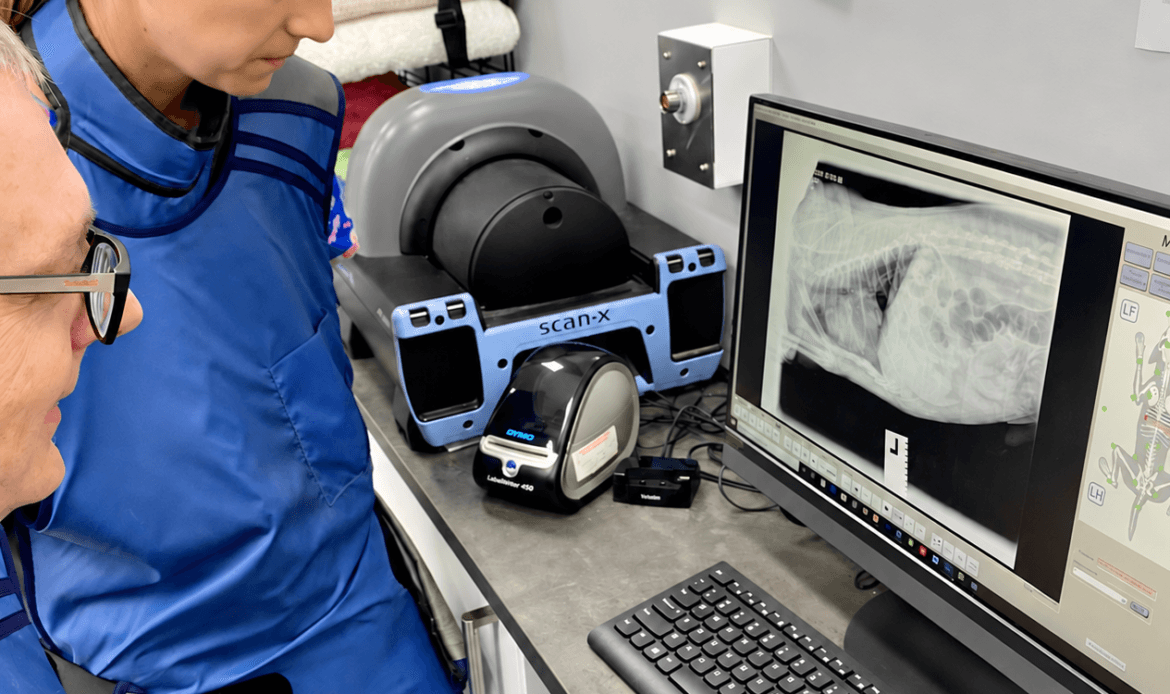
X-rays allow us to see structures inside your pet’s body without surgery. They are particularly useful for examining bones and joints, as well as the chest and abdomen.
At Blakehurst Vet, we may recommend an X-ray when investigating:
- Limping or an injury
- A suspected broken bone
- Coughing or breathing changes
- A possible swallowed object
- Bladder stones
- Changes in the size or position of internal organs
For example, if your dog has suddenly started favouring one leg, an examination comes first, but X-rays may help us investigate certain causes of limping in dogs.
Some pets remain still enough for X-rays without sedation. Others may need sedation if they are anxious, uncomfortable or need to be positioned carefully to obtain a clear and useful image.
Why Might We Recommend an Ultrasound?
Ultrasound gives us a different type of information.
It uses sound waves to produce real-time images of soft tissues and internal organs. An abdominal ultrasound may allow us to examine areas such as the liver, kidneys, bladder, spleen, stomach and intestines.
This can help us look at an organ’s size, shape and internal appearance and investigate changes that may not be clear on an X-ray.
For example, if a cat has stopped eating, we may recommend blood tests, X-rays or ultrasound depending on their history and what we find during their examination.
Ultrasound is non-invasive and does not use ionising radiation. Some fur will usually need to be clipped from the area being examined so the probe can make good contact with the skin and produce a clear image.
Why Might Your Pet Need More Than One Test?
Because each diagnostic test tells us something different.
A blood test might show changes associated with an organ, but it cannot show us what that organ physically looks like. An ultrasound may then help us examine its structure in more detail.
Similarly, an X-ray may show that an organ appears enlarged, while an ultrasound can provide more information about its internal appearance.
One test does not necessarily replace another. Sometimes the most useful information comes from putting several pieces of the puzzle together.
At Blakehurst Vet, we consider your pet’s history, our physical examination and any appropriate diagnostic results before deciding what should happen next.
What Happens When My Pet Comes In for Diagnostic Testing?
What happens on the day depends on the test and your pet.
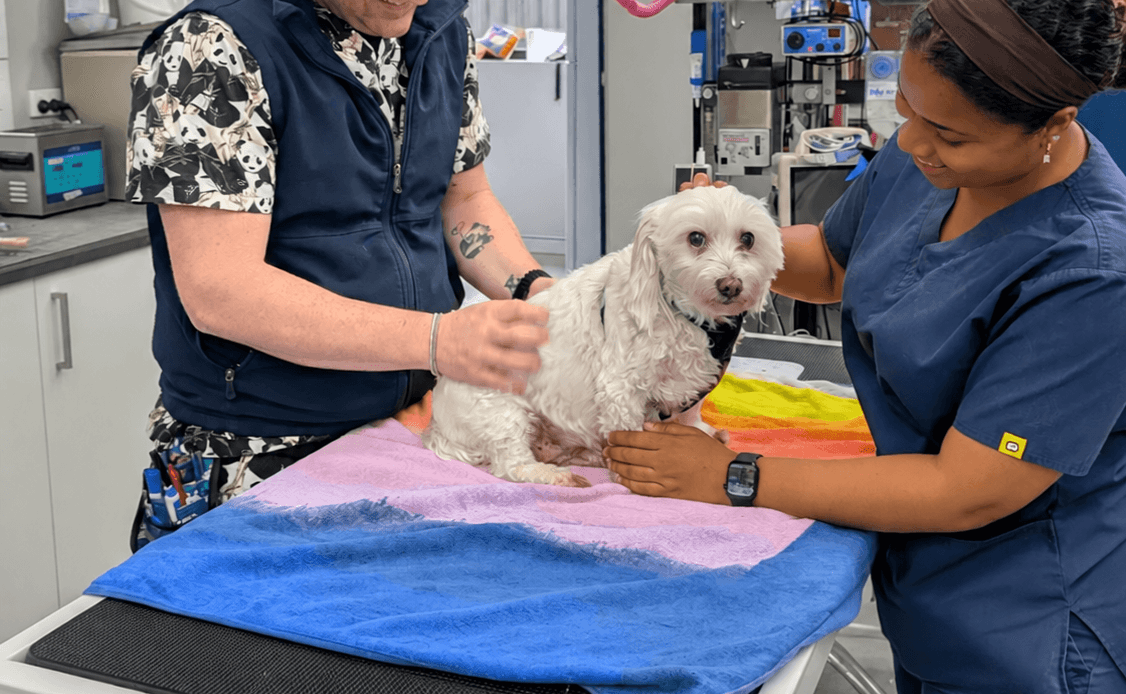
For a blood test, we usually collect a small sample from a vein. The process itself is generally quick, although some pets appreciate an extra pair of hands and plenty of reassurance.
X-rays require your pet to stay still in particular positions so we can obtain clear images. If they are painful, very nervous or unlikely to remain still, we may discuss sedation with you.
For an ultrasound, your pet will usually lie on a padded surface while we examine the area with an ultrasound probe. Fur may need to be clipped and gel is applied to the skin to help us obtain clear images.
If your pet needs any special preparation before their appointment, our team will let you know beforehand.
Does Having Tests Mean Something Serious Is Wrong?
Not necessarily.
We also use diagnostic tests to rule problems out, monitor existing conditions, assess older pets and check whether treatment is working as expected.
Sometimes a normal result is very reassuring.
Testing can also help us avoid making assumptions. Two pets can show very similar symptoms for completely different reasons, so getting more information can help us choose the most appropriate next step rather than treating the symptom alone.
If we recommend testing, our team will explain why we think it may be useful, what we are looking for and how the result could affect your pet’s care.
FAQs
Does My Pet Always Need Blood Tests, an X-ray and an Ultrasound?
No. We recommend testing based on your pet’s individual situation. Some pets may only need one test, while others benefit from several different investigations.
Are X-rays Painful for Pets?
The X-ray itself is not painful. However, an injured or sore pet may find certain positions uncomfortable, which is one reason we may recommend sedation in some cases.
Is Ultrasound Safe for Dogs and Cats?
Yes. Ultrasound uses sound waves rather than ionising radiation and is commonly used to examine internal organs in dogs and cats.
Does My Pet Need to Fast Before Blood Tests or an Ultrasound?
Sometimes. It depends on the test being performed and your pet’s individual situation. If fasting or another type of preparation is required, the Blakehurst Vet team will give you instructions before the appointment.
Do not withhold food, water or medication unless we have specifically asked you to do so.
How Quickly Will I Get My Pet’s Results?
It depends on the test. Some diagnostic testing can be performed at Blakehurst Vet, while specialised tests may need to be sent to an external laboratory.
Some imaging findings can be discussed with you straight away, while other cases may require further review or additional testing. Our team will explain what to expect.
You can also find answers to other common questions on our Blakehurst Vet FAQs.
Concerned About a Change in Your Pet?
If your dog or cat has a reduced appetite, unexplained weight loss, vomiting, increased thirst, lethargy, pain or another change that concerns you, the best place to start is an examination.
Our vets can assess your pet and explain whether blood tests, X-rays, ultrasound or another investigation may be helpful.