

Why Is My Dog Limping? Common Causes and When to See a Vet
One minute your dog is walking normally, and the next they are favouring a leg or refusing to put a paw down at all.
Sometimes the reason is obvious. They may have stepped on something sharp, torn a nail or overdone it at the park. Other times, a limp appears without any obvious injury.
So, why is your dog limping, and when should you book a vet appointment?
Quick answer: Why is my dog limping?
Dogs limp when pain, weakness or another problem makes it uncomfortable or difficult to use a leg normally.
Common causes include paw injuries, torn nails, muscle strains, joint injuries, cruciate ligament problems, arthritis, fractures and dislocations.
Some causes are minor, but a persistent or severe limp should be assessed by a veterinarian.
If your dog will not put any weight on the leg, appears to be in significant pain, has obvious swelling or an abnormal-looking limb, or the limp followed a significant accident or injury, seek veterinary care promptly.
Start with the paw
If your dog suddenly begins limping, the problem may be right at the bottom of the leg.
Something caught between the toes, a cut paw pad, an injured nail or irritation between the toes can all make walking painful.
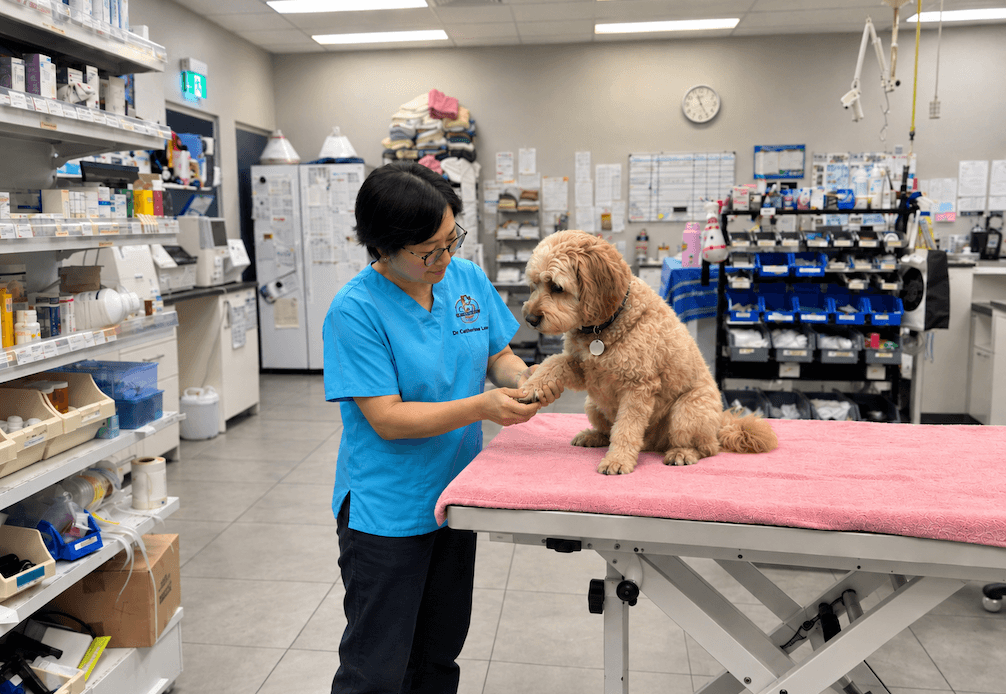
If your dog is comfortable enough for you to look, check the paw gently. Look underneath and between the toes and compare it with the other foot.
Do not dig around for anything deeply embedded or keep examining the leg if your dog is painful. Even a normally placid dog may react differently when something hurts.
Could my dog have pulled a muscle?
Yes. Strains and sprains are common reasons for a sudden limp, particularly after running, jumping, rough play or an unusually energetic day.
A soft tissue injury may not produce anything obvious to see from the outside. Your dog may simply take shorter steps, favour one leg or become more reluctant to exercise.
It can be tempting to assume a limp is “just a sprain”, but ligament and joint injuries can look similar at first. If the limp is significant, persists or keeps returning, it is worth having it examined rather than trying to diagnose the cause at home.
What is a cruciate ligament injury?
The cranial cruciate ligament helps stabilise a dog’s knee. Disease or damage to this ligament is a common cause of hind-leg limping.
Some dogs develop subtle or intermittent lameness as the ligament gradually weakens. Others suddenly become very lame, particularly if the ligament tears more severely.
You might also notice difficulty getting up, hesitation on stairs, less weight being placed through one back leg or a change in the way your dog sits.
A veterinary examination is needed to assess the knee and determine whether further tests or treatment are required.
Could arthritis make my dog limp?
Yes. Arthritis can cause stiffness, discomfort and limping, particularly in older dogs, although it is not restricted to seniors.
Unlike a sudden injury, arthritis may cause a limp that comes and goes. You might notice your dog is worse after resting, slower to get up, reluctant to jump into the car or less enthusiastic about stairs and longer walks.
If you have noticed these sorts of changes, you can read more about the signs of arthritis in dogs.
Arthritis is only one possible cause of ongoing limping, so an examination is important before assuming age is the reason.
Can a fracture or dislocation cause limping?
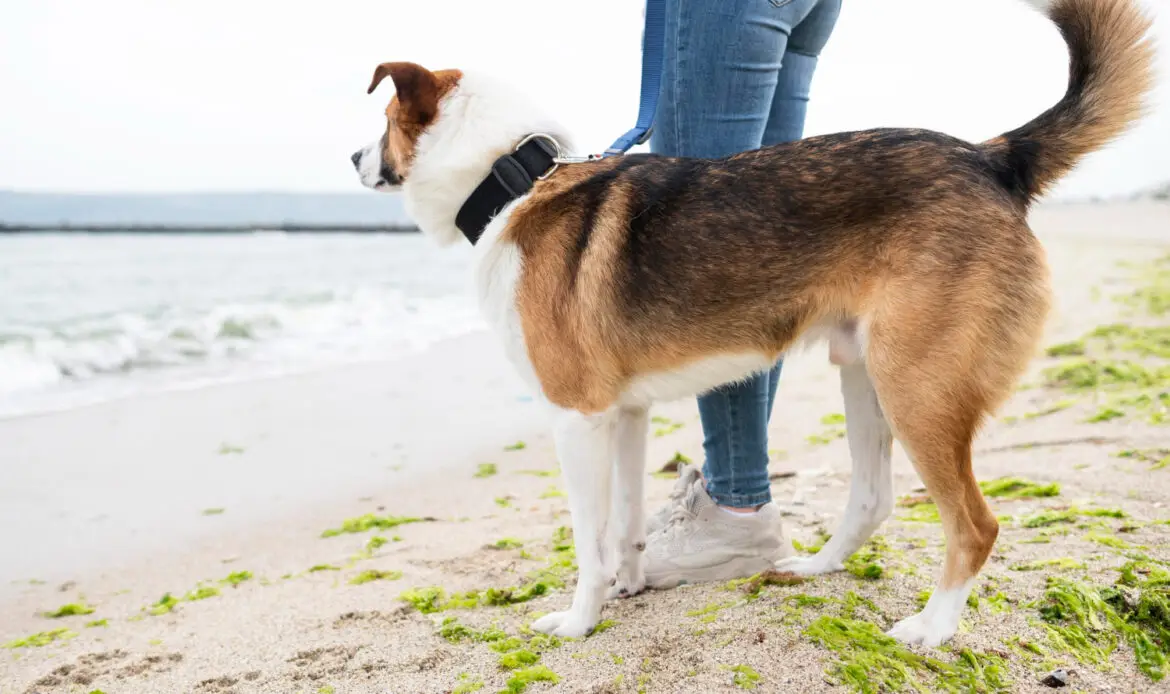
Yes. Fractures and dislocations can cause severe lameness, pain, swelling or an abnormal position of the limb.
However, not every fracture is dramatically obvious from the outside.
If your dog has been hit by a vehicle, fallen from a height or experienced another significant accident, veterinary assessment is important even if you cannot see a major injury.
A dog that cannot bear weight on a leg also needs prompt attention. You can read more about situations that need urgent care in our guide to pet emergencies.
Why does my dog keep limping on and off?
An intermittent limp should not necessarily be dismissed because your dog looks normal again later.
Joint disease, arthritis, partial ligament injuries and some other orthopaedic problems can cause symptoms that improve temporarily and then return.
Pay attention to when it happens. Does your dog limp after running? When they first get out of bed? After a long walk? Do they hesitate on stairs or jump less than they used to?
A short video taken at home can be very useful. Dogs do not always demonstrate their limp once they arrive at the vet, particularly when excitement and adrenaline take over.
When should I take my limping dog to the vet?
Contact a vet promptly if your dog:
- Cannot put weight on the leg
- Is in obvious or severe pain
- Has significant swelling
- Has bleeding or a badly damaged nail or paw
- Has a limb that looks abnormal
- Has been involved in a significant accident
- Seems generally unwell as well as lame
A milder limp also deserves attention if it is not improving, keeps returning or is affecting your dog’s normal activities.
Blakehurst Vet usually has same-day appointments available when something suddenly seems wrong with your pet.
If you are concerned about your dog’s limp, book an appointment or call us on (02) 9547 2750.
What will the vet check?
We will usually begin by asking when the limp started, whether anything happened beforehand and whether it has been improving or getting worse.
Your vet will watch how your dog moves and examine the affected leg, including the paw, muscles, joints and bones.
Sometimes the source of the discomfort becomes clear during the examination. In other cases, further investigation may be recommended.
Blakehurst Vet has on-site diagnostics and imaging, including pathology, ultrasound and X-ray.
X-rays can be particularly useful when we need to assess bones and joints for problems such as fractures, arthritis or other changes.
Should I give my dog pain medication at home?
Do not give your dog human pain medication unless a veterinarian has specifically instructed you to do so.
Some medicines commonly used by people can be dangerous for dogs.
If your dog appears uncomfortable, restrict strenuous activity and contact your vet for advice. The right treatment depends on why your dog is limping rather than simply on the presence of pain.
Frequently asked questions
Why is my dog suddenly limping but not crying?
Dogs do not always cry or vocalise when they are in pain. A limp itself can be an important sign that something is uncomfortable.
Check the paw gently if your dog allows it, but arrange a veterinary examination if the limp is significant, persists or you cannot identify an obvious minor cause.
Can I wait and see if my dog’s limp improves?
A very mild limp after activity may improve with rest, but you should monitor it closely.
Do not wait if your dog cannot bear weight, is very painful, has significant swelling, has suffered significant trauma or seems unwell.
A limp that persists or repeatedly returns should also be examined.
Why does my dog limp after getting up but then improve?
Stiffness after rest can occur with arthritis and other joint problems. Once your dog starts moving, they may appear to loosen up.
If this is happening regularly, particularly in an older dog, arrange a veterinary examination rather than assuming it is simply part of ageing.
You can also read more about senior pet care and the changes worth watching as pets get older.
Does a limping dog always need an X-ray?
No. The first step is usually a veterinary examination.
Depending on what your vet finds, an X-ray may be recommended to investigate the bones or joints. Some soft tissue injuries may require a different approach.
My dog is limping but still wants to run. Is that okay?
Not necessarily.
Some dogs remain very enthusiastic about exercise even when something hurts.
Until you know why your dog is limping, avoid strenuous exercise, running and jumping that could aggravate an injury.
Dog limping in Blakehurst, Hurstville or the Sutherland Shire?
If your dog has developed a limp and you are not sure what is causing it, we can help work out what is going on.
Blakehurst Vet provides veterinary examinations and on-site diagnostics and imaging for dogs from Blakehurst, Hurstville, South Hurstville, Sylvania, St George and the Sutherland Shire.
Same-day appointments are usually available when your pet needs to be seen quickly.
Book an appointment online or call Blakehurst Vet on (02) 9547 2750.